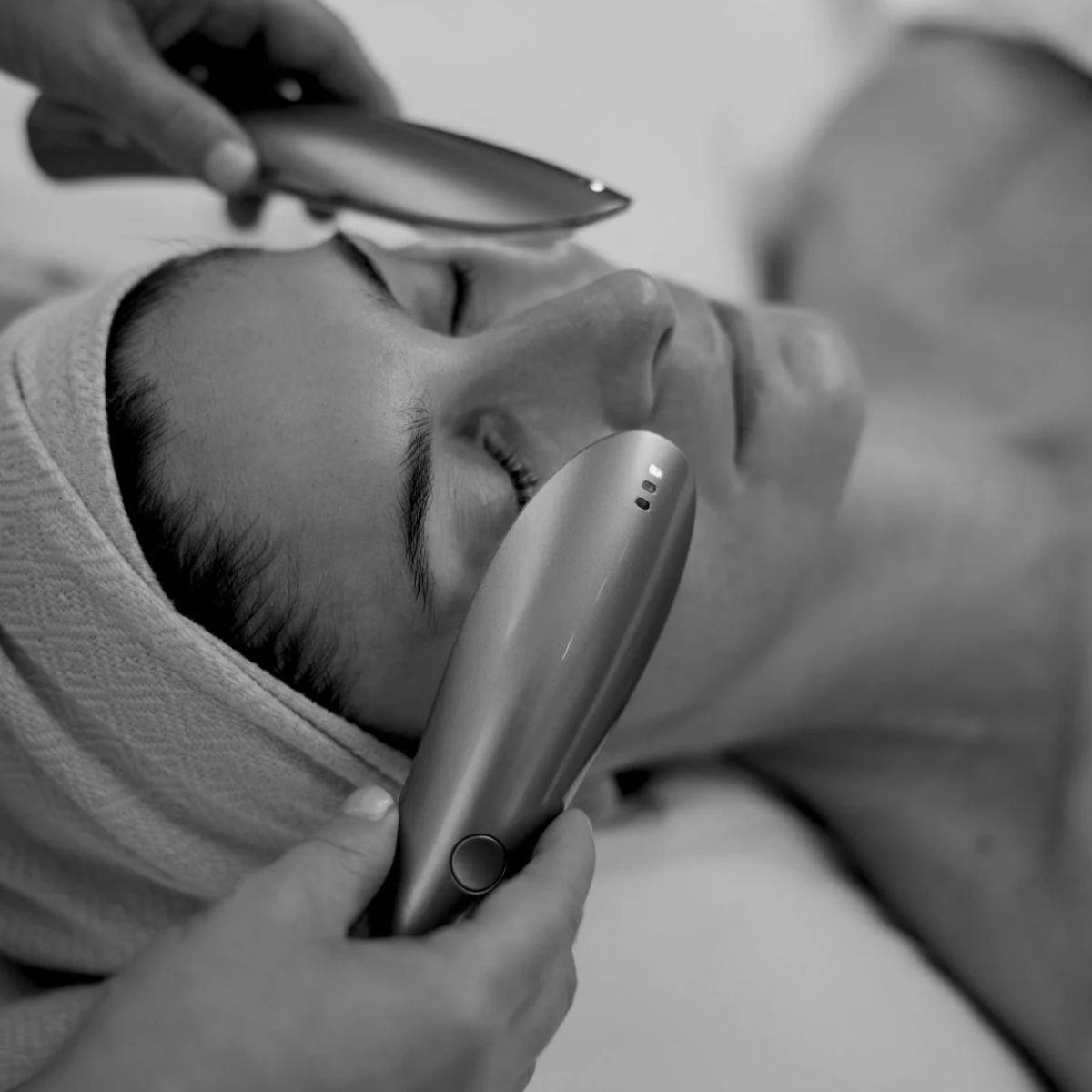
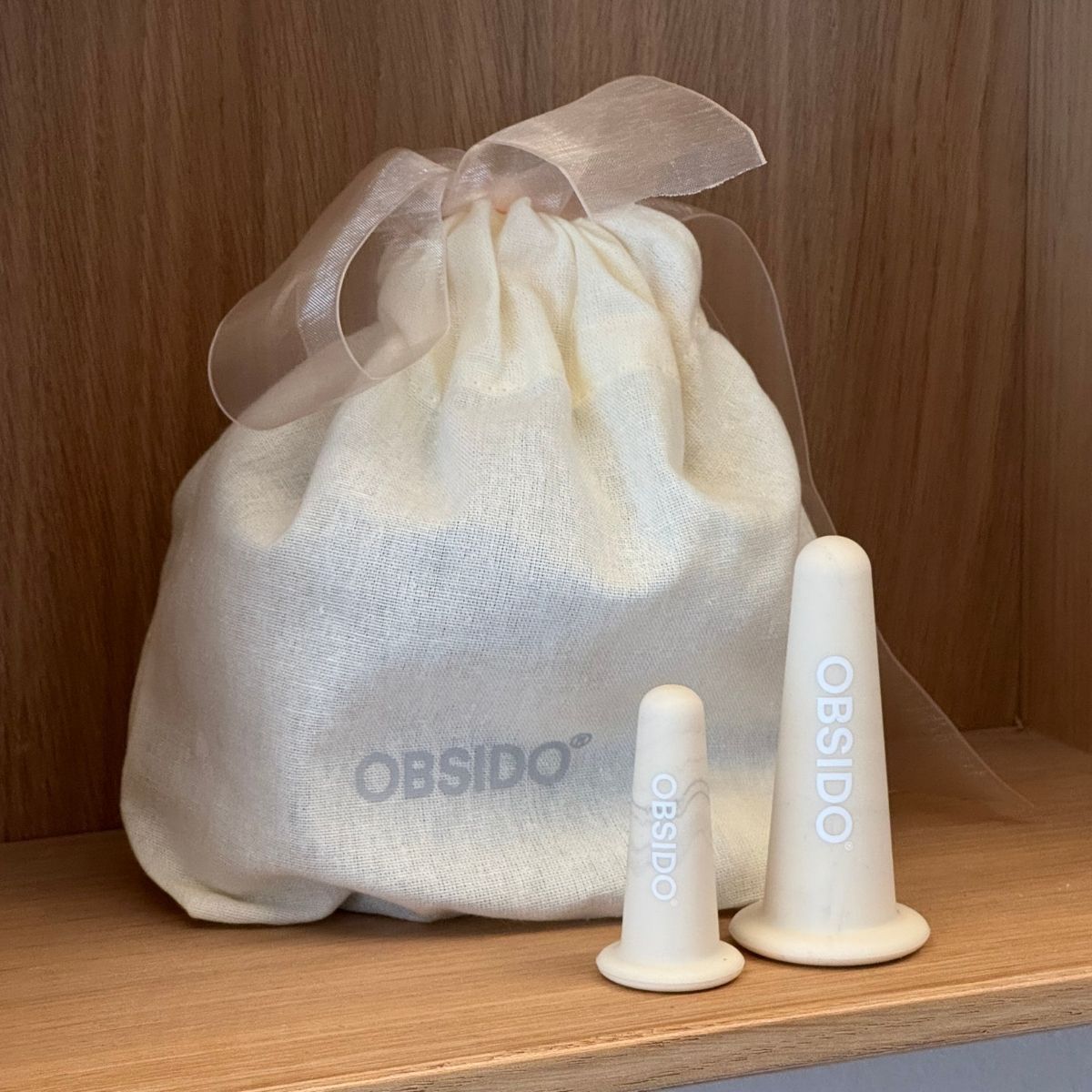
"Should I choose gua sha or facial cups?" This is one of the questions I get asked most often. My short answer is: It depends on how you want to work with your skin. Gua sha glides across the skin with light pressure. A facial cup, on the other hand, creates a gentle vacuum that slightly lifts the skin as the tool moves. I don't think one tool is generally better than the other. The right choice depends on the sensation you prefer, which areas you want to work on, and how much control you want over the technique. Here's the difference, without grand promises and without making your routine more complicated than necessary. The short difference between gua sha and facial cupping Gua sha Facial cupping Skin contact A firm tool glides over the skin with light pressure. A soft cup creates a gentle vacuum and moves across the skin. Sensation Gliding and massaging. Lightly lifting and pulsating. Control Pressure and angle are controlled by hand. Intensity is controlled by how much the cup is squeezed. Precision The shape and edge can be precisely used along the face's contours. Small and large cups offer different degrees of precision. Important Use a product with glide, and avoid harsh scraping. Use a product with glide, keep the cup moving, and apply light suction. What is gua sha? Gua sha is a manual technique where a smooth tool is guided over the skin. In a modern facial routine, the technique is used much more gently than traditional gua sha on the body. The edges of the tool allow for controlled strokes along, for example, the jawline, cheeks, and forehead. A small randomized study from 2025 investigated facial gua sha and facial rollers. The results point to measurable, short-term changes, but the study does not document that gua sha can create a permanent facelift. An older pilot study found increased local microcirculation after traditional gua sha on the back. This cannot be directly applied to cosmetic use on the face. What is facial cupping? In facial cupping, a soft cup is gently squeezed to create a mild vacuum against the skin. The cup can then be used in calm gliding movements or with short, controlled pumps. Studies on cupping show that negative pressure can temporarily change local blood flow. However, research often uses stronger pressure and different areas of the body than for facial cupping. Therefore, there is no basis for promising permanent cosmetic results, collagen stimulation, or "detoxification" of waste products. If you want to learn the basic technique, you can read our guide to safe facial cupping at home. When might gua sha be the best choice? When you prefer a firm tool and want to control pressure and angle yourself. When you want to follow the face's contours with precise, gliding movements. When you don't like the sensation of a vacuum. When you want a calm facial massage as part of your skincare routine. When might facial cups be the best choice? When you prefer a lightly lifting or pulsating sensation. When you want to be able to switch between small and large cups for different areas. When you want a flexible tool that can be used with very light suction. When you have already learned a simple routine and can keep the cup moving. Can you combine gua sha and facial cupping? Yes. The two techniques don't have to compete. For example, you can start with a few light strokes with a facial cup and then use gua sha more targeted. Another option is to choose one tool at a time and see how your skin reacts. Seashell Facial Cups from Obsido combine a flexible cup with a shaped edge that can be used without vacuum as a massage tool. If you prefer a classic, soft cup, you can see Velvet Facial Cup. What should you use with the tool? Both gua sha and facial cups require sufficient glide. Choose a cleansing product, balm, or oil that suits your skin and allows you to move the tool without pulling. An active serum is not automatically suitable as a glide product, as it can dry quickly or irritate when the skin is being worked on. Which tool is best for beginners? It depends more on the instruction than on the tool. Gua sha provides direct control over the pressure. A soft facial cup can also be simple, but requires you to learn how to create a very light vacuum and never leave the cup still. Start with one or two simple strokes and a few minutes of use. More pressure, more suction, and longer time does not equate to a better result. When should you take a break? Avoid working on open wounds, infections, sunburned or visibly irritated skin. Also take a break if the tool causes pain, significant redness, or discoloration. For skin diseases, blood-thinning medication, or recent cosmetic treatment, you should follow the advice of a doctor or the practitioner who knows your case. How to choose Choose gua sha if you want a firm tool and precise control over pressure and angle. Choose facial cups if you prefer a flexible tool and a light vacuum technique. Choose a combination if you want to be able to switch between gliding massage and gentle cupping without collecting many different tools. At Obsido Skin, we work on the principle of fewer, smarter tools. The most important thing is therefore not to own as many beauty tools as possible, but to choose a tool you understand and actually use. Sources and professional demarcation There is only limited research on the long-term cosmetic effects of both facial cupping and facial gua sha. The sources below primarily document short-term physiological reactions and general safety – not permanent changes in facial shape or skin aging. National Center for Complementary and Integrative Health: Cupping Wang et al.: pressure, duration, and skin blood flow during cupping Effects of facial gua sha and facial roller: randomized study Nielsen et al.: pilot study of gua sha and local microcirculation
"Should I choose gua sha or facial cups?" This is one of the questions I get asked most often. My short answer is: It depends on how you want to work with your skin. Gua sha glides across the skin with light pressure. A facial cup, on the other hand, creates a gentle vacuum that slightly lifts the skin as the tool moves. I don't think one tool is generally better than the other. The right choice depends on the sensation you prefer, which areas you want to work on, and how much control you want over the technique. Here's the difference, without grand promises and without making your routine more complicated than necessary. The short difference between gua sha and facial cupping Gua sha Facial cupping Skin contact A firm tool glides over the skin with light pressure. A soft cup creates a gentle vacuum and moves across the skin. Sensation Gliding and massaging. Lightly lifting and pulsating. Control Pressure and angle are controlled by hand. Intensity is controlled by how much the cup is squeezed. Precision The shape and edge can be precisely used along the face's contours. Small and large cups offer different degrees of precision. Important Use a product with glide, and avoid harsh scraping. Use a product with glide, keep the cup moving, and apply light suction. What is gua sha? Gua sha is a manual technique where a smooth tool is guided over the skin. In a modern facial routine, the technique is used much more gently than traditional gua sha on the body. The edges of the tool allow for controlled strokes along, for example, the jawline, cheeks, and forehead. A small randomized study from 2025 investigated facial gua sha and facial rollers. The results point to measurable, short-term changes, but the study does not document that gua sha can create a permanent facelift. An older pilot study found increased local microcirculation after traditional gua sha on the back. This cannot be directly applied to cosmetic use on the face. What is facial cupping? In facial cupping, a soft cup is gently squeezed to create a mild vacuum against the skin. The cup can then be used in calm gliding movements or with short, controlled pumps. Studies on cupping show that negative pressure can temporarily change local blood flow. However, research often uses stronger pressure and different areas of the body than for facial cupping. Therefore, there is no basis for promising permanent cosmetic results, collagen stimulation, or "detoxification" of waste products. If you want to learn the basic technique, you can read our guide to safe facial cupping at home. When might gua sha be the best choice? When you prefer a firm tool and want to control pressure and angle yourself. When you want to follow the face's contours with precise, gliding movements. When you don't like the sensation of a vacuum. When you want a calm facial massage as part of your skincare routine. When might facial cups be the best choice? When you prefer a lightly lifting or pulsating sensation. When you want to be able to switch between small and large cups for different areas. When you want a flexible tool that can be used with very light suction. When you have already learned a simple routine and can keep the cup moving. Can you combine gua sha and facial cupping? Yes. The two techniques don't have to compete. For example, you can start with a few light strokes with a facial cup and then use gua sha more targeted. Another option is to choose one tool at a time and see how your skin reacts. Seashell Facial Cups from Obsido combine a flexible cup with a shaped edge that can be used without vacuum as a massage tool. If you prefer a classic, soft cup, you can see Velvet Facial Cup. What should you use with the tool? Both gua sha and facial cups require sufficient glide. Choose a cleansing product, balm, or oil that suits your skin and allows you to move the tool without pulling. An active serum is not automatically suitable as a glide product, as it can dry quickly or irritate when the skin is being worked on. Which tool is best for beginners? It depends more on the instruction than on the tool. Gua sha provides direct control over the pressure. A soft facial cup can also be simple, but requires you to learn how to create a very light vacuum and never leave the cup still. Start with one or two simple strokes and a few minutes of use. More pressure, more suction, and longer time does not equate to a better result. When should you take a break? Avoid working on open wounds, infections, sunburned or visibly irritated skin. Also take a break if the tool causes pain, significant redness, or discoloration. For skin diseases, blood-thinning medication, or recent cosmetic treatment, you should follow the advice of a doctor or the practitioner who knows your case. How to choose Choose gua sha if you want a firm tool and precise control over pressure and angle. Choose facial cups if you prefer a flexible tool and a light vacuum technique. Choose a combination if you want to be able to switch between gliding massage and gentle cupping without collecting many different tools. At Obsido Skin, we work on the principle of fewer, smarter tools. The most important thing is therefore not to own as many beauty tools as possible, but to choose a tool you understand and actually use. Sources and professional demarcation There is only limited research on the long-term cosmetic effects of both facial cupping and facial gua sha. The sources below primarily document short-term physiological reactions and general safety – not permanent changes in facial shape or skin aging. National Center for Complementary and Integrative Health: Cupping Wang et al.: pressure, duration, and skin blood flow during cupping Effects of facial gua sha and facial roller: randomized study Nielsen et al.: pilot study of gua sha and local microcirculation