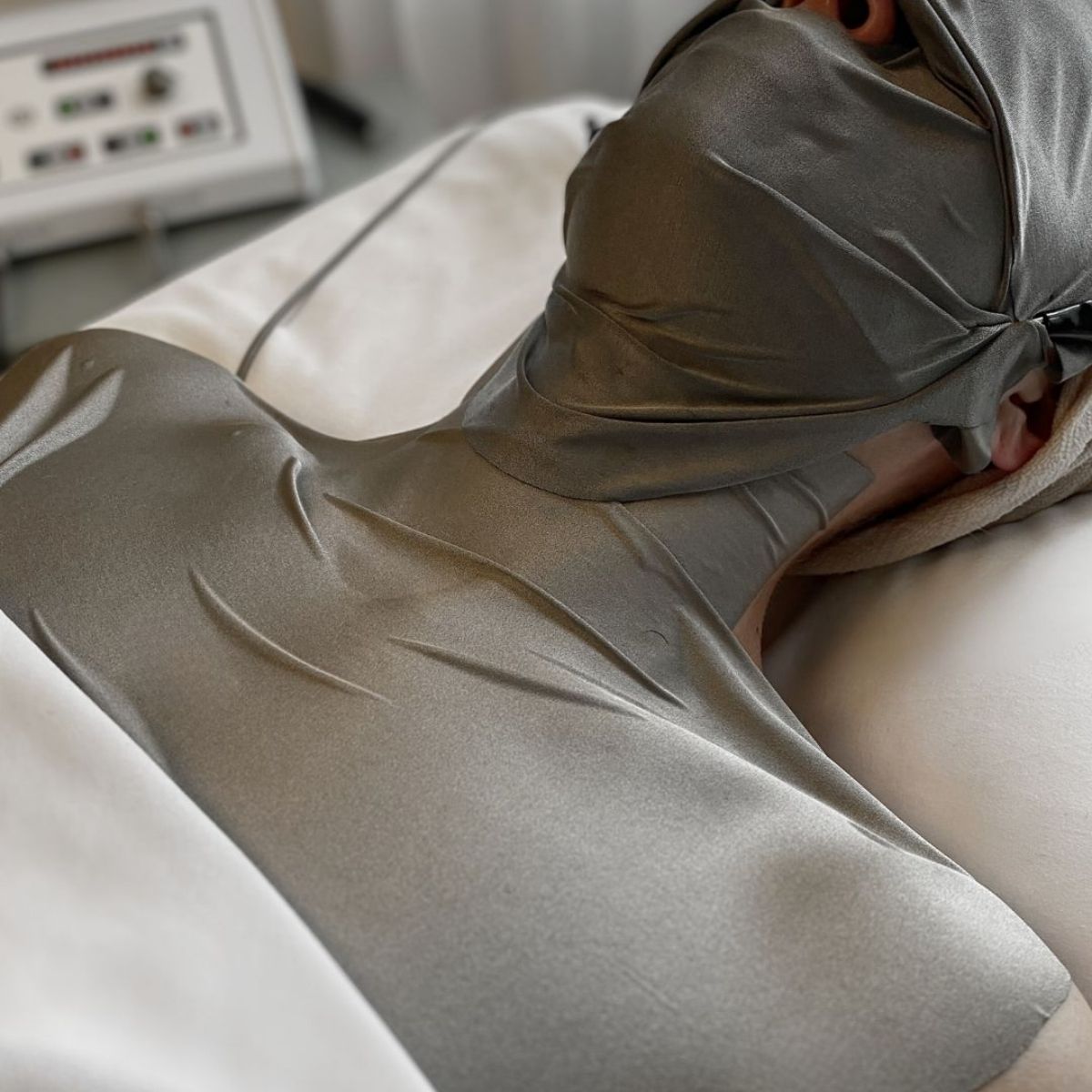
I am not impressed by technology just because it lights up, hums, or has a fancy name. It needs to have a function, make sense in a treatment, and be comfortable to use. This is also how I view red and near-infrared LED light. At Obsido Studio, we use our Triple Wave Therapy Blanket. What's special is not just that the light is distributed around a large part of the body. The blanket also combines three wavelengths: 660, 850, and 940 nm. What do 660, 850, and 940 nm mean? Nanometer – abbreviated nm – tells us the wavelength of the light. This alone is not a mark of quality. The effect also depends on factors such as brightness, dose, treatment time, distance to the skin, and the specific device. 660 nm is visible red light. It is often used in photobiomodulation where the skin is the primary treatment area. 850 nm is near-infrared light. It cannot be seen with the eye and has a different optical profile in the tissue than visible red light. 940 nm is also near-infrared light. It lies further out in the infrared spectrum and again has a different absorption profile than 850 nm. The three wavelengths therefore provide a broader light spectrum. It is more professionally accurate to say this than to claim that one specific wavelength always reaches a specific depth or guarantees a specific result. The body's tissues absorb and scatter light differently, and research on one device cannot simply be transferred to another. Why does our LED blanket use three wavelengths? Many of the LED blankets we have been able to verify on the market combine 660 and 850 nm. The Triple Wave Therapy Blanket at Obsido Studio adds 940 nm, thus working with three wavelengths. This makes the blanket different from the common two-wavelength models we have reviewed. But I won't call it "the only one in the world" until that claim can be substantiated across a constantly changing market. For me, precision is more important than a fancy headline. An LED blanket is different from local LED treatment At many clinics, you encounter LEDs as a mask or a panel aimed at a defined area – often the face. Celluma FACE, for example, is a smaller, flexible panel with an illuminated treatment area of approximately 36 × 15 cm. It uses 465, 640, and 880 nm depending on the treatment program. Beauty Angel is a cabin-based solution. Therefore, it is also not the same form of treatment as a blanket that lies snugly around the body. The difference is primarily format and coverage area: Mask or smaller panel: light on a local, defined area. Cabin: light from a stationary solution around the body, but without an enveloping blanket. Triple Wave Therapy Blanket: a flexible LED blanket placed closely around a large part of the body. A larger coverage area does not automatically equate to a greater documented effect. It means that the experience and application are different. What is red and near-infrared light? Red light is visible. Near-infrared light lies just outside the range the eye can see. Both are used in what is called photobiomodulation or red light therapy. It is not UV light. You won't get a tan from the treatment, and it's not the same as sunlight or a tanning bed. The research is interesting, but the result depends on the device, wavelength, strength, distance, time, and number of treatments. Therefore, one cannot take a result from one study and promise that all lamps, masks, and blankets will do the same. How we use the blanket at Obsido Studio The Triple Wave Therapy Blanket is our solution when we want LED light around the body rather than just on a small area. You lie still while the blanket is placed around your body. With us, the LED blanket can be booked as a standalone treatment for 15 or 30 minutes. If you want to combine it with a facial or body treatment, you select the light blanket as an add-on when booking the desired treatment. I do not see it as a miracle cure, but as a tool that can make sense both alone and as a supplement. See the Triple Wave Therapy Blanket at Obsido Studio How does it feel? The most common question is actually not what the light does. It is: "How does it feel?" The experience is calm. You lie still in the blanket, and some feel warmth, while others mostly notice the break and time without disturbances. In my opinion, a treatment can be technological and at the same time feel caring. What can we say – and what can we not promise? Research in photobiomodulation encompasses many devices, doses, wavelengths, and applications. A recent comprehensive review of randomized studies assessed the evidence as moderate for some health outcomes, but low or very low for many others. Better standardization of treatment protocols is still needed. Therefore, we do not promise that the blanket cures disease, reduces inflammation, repairs injuries, or guarantees new collagen production. We can explain the technology, describe how we use it, and be clear about the difference between a pleasant customer experience and a documented medical effect. Is red light therapy safe for everyone? LED light is non-invasive, but everyone must still be assessed individually. Always tell us about medication, skin diseases, light sensitivity, pregnancy, implants, and past or current cancer. Certain medications and conditions can increase light sensitivity. If there's anything we're unsure about, it must be clarified before we begin. My advice if you are curious Don't start with the question: "Can LED solve everything?" Start with: "What do I want to get out of my treatment, and does this tool fit in?" If you want a calm, full-body oriented LED treatment at Obsido Studio in Vejle, the Triple Wave Therapy Blanket can be booked alone or selected as an add-on to a facial or body treatment. If you are in doubt, we would rather help you choose correctly than choose the most. Read more about the LED blanket and its possibilities Sources and professional demarcation Umbrella review of randomized studies in photobiomodulation Review of wavelength, dose, and other light parameters Celluma FACE: format, treatment area, and wavelengths Ergoline Beauty Angel 7200: product format and technical data The information about 660, 850, and 940 nm in Obsido Studio's blanket follows the product specification. This article is about cosmetic LED light and well-being and does not replace medical assessment or treatment.
I am not impressed by technology just because it lights up, hums, or has a fancy name. It needs to have a function, make sense in a treatment, and be comfortable to use. This is also how I view red and near-infrared LED light. At Obsido Studio, we use our Triple Wave Therapy Blanket. What's special is not just that the light is distributed around a large part of the body. The blanket also combines three wavelengths: 660, 850, and 940 nm. What do 660, 850, and 940 nm mean? Nanometer – abbreviated nm – tells us the wavelength of the light. This alone is not a mark of quality. The effect also depends on factors such as brightness, dose, treatment time, distance to the skin, and the specific device. 660 nm is visible red light. It is often used in photobiomodulation where the skin is the primary treatment area. 850 nm is near-infrared light. It cannot be seen with the eye and has a different optical profile in the tissue than visible red light. 940 nm is also near-infrared light. It lies further out in the infrared spectrum and again has a different absorption profile than 850 nm. The three wavelengths therefore provide a broader light spectrum. It is more professionally accurate to say this than to claim that one specific wavelength always reaches a specific depth or guarantees a specific result. The body's tissues absorb and scatter light differently, and research on one device cannot simply be transferred to another. Why does our LED blanket use three wavelengths? Many of the LED blankets we have been able to verify on the market combine 660 and 850 nm. The Triple Wave Therapy Blanket at Obsido Studio adds 940 nm, thus working with three wavelengths. This makes the blanket different from the common two-wavelength models we have reviewed. But I won't call it "the only one in the world" until that claim can be substantiated across a constantly changing market. For me, precision is more important than a fancy headline. An LED blanket is different from local LED treatment At many clinics, you encounter LEDs as a mask or a panel aimed at a defined area – often the face. Celluma FACE, for example, is a smaller, flexible panel with an illuminated treatment area of approximately 36 × 15 cm. It uses 465, 640, and 880 nm depending on the treatment program. Beauty Angel is a cabin-based solution. Therefore, it is also not the same form of treatment as a blanket that lies snugly around the body. The difference is primarily format and coverage area: Mask or smaller panel: light on a local, defined area. Cabin: light from a stationary solution around the body, but without an enveloping blanket. Triple Wave Therapy Blanket: a flexible LED blanket placed closely around a large part of the body. A larger coverage area does not automatically equate to a greater documented effect. It means that the experience and application are different. What is red and near-infrared light? Red light is visible. Near-infrared light lies just outside the range the eye can see. Both are used in what is called photobiomodulation or red light therapy. It is not UV light. You won't get a tan from the treatment, and it's not the same as sunlight or a tanning bed. The research is interesting, but the result depends on the device, wavelength, strength, distance, time, and number of treatments. Therefore, one cannot take a result from one study and promise that all lamps, masks, and blankets will do the same. How we use the blanket at Obsido Studio The Triple Wave Therapy Blanket is our solution when we want LED light around the body rather than just on a small area. You lie still while the blanket is placed around your body. With us, the LED blanket can be booked as a standalone treatment for 15 or 30 minutes. If you want to combine it with a facial or body treatment, you select the light blanket as an add-on when booking the desired treatment. I do not see it as a miracle cure, but as a tool that can make sense both alone and as a supplement. See the Triple Wave Therapy Blanket at Obsido Studio How does it feel? The most common question is actually not what the light does. It is: "How does it feel?" The experience is calm. You lie still in the blanket, and some feel warmth, while others mostly notice the break and time without disturbances. In my opinion, a treatment can be technological and at the same time feel caring. What can we say – and what can we not promise? Research in photobiomodulation encompasses many devices, doses, wavelengths, and applications. A recent comprehensive review of randomized studies assessed the evidence as moderate for some health outcomes, but low or very low for many others. Better standardization of treatment protocols is still needed. Therefore, we do not promise that the blanket cures disease, reduces inflammation, repairs injuries, or guarantees new collagen production. We can explain the technology, describe how we use it, and be clear about the difference between a pleasant customer experience and a documented medical effect. Is red light therapy safe for everyone? LED light is non-invasive, but everyone must still be assessed individually. Always tell us about medication, skin diseases, light sensitivity, pregnancy, implants, and past or current cancer. Certain medications and conditions can increase light sensitivity. If there's anything we're unsure about, it must be clarified before we begin. My advice if you are curious Don't start with the question: "Can LED solve everything?" Start with: "What do I want to get out of my treatment, and does this tool fit in?" If you want a calm, full-body oriented LED treatment at Obsido Studio in Vejle, the Triple Wave Therapy Blanket can be booked alone or selected as an add-on to a facial or body treatment. If you are in doubt, we would rather help you choose correctly than choose the most. Read more about the LED blanket and its possibilities Sources and professional demarcation Umbrella review of randomized studies in photobiomodulation Review of wavelength, dose, and other light parameters Celluma FACE: format, treatment area, and wavelengths Ergoline Beauty Angel 7200: product format and technical data The information about 660, 850, and 940 nm in Obsido Studio's blanket follows the product specification. This article is about cosmetic LED light and well-being and does not replace medical assessment or treatment.